04

Blackbook

Fine Arts

Journalism

Class

Advanced Typography

Duration

6 weeks

Typefaces

Subway, Manuka, Cako, Aktiv Grotesk

Deliverables

Editorial, Logo

Problem

Graffiti magazines often sanitize the very culture they aim to represent, using rigid layouts and clean design that disconnect from the raw, layered, and chaotic energy of street art. This approach fails to resonate with a generation raised on zines, subcultures, and visual noise.

Solution

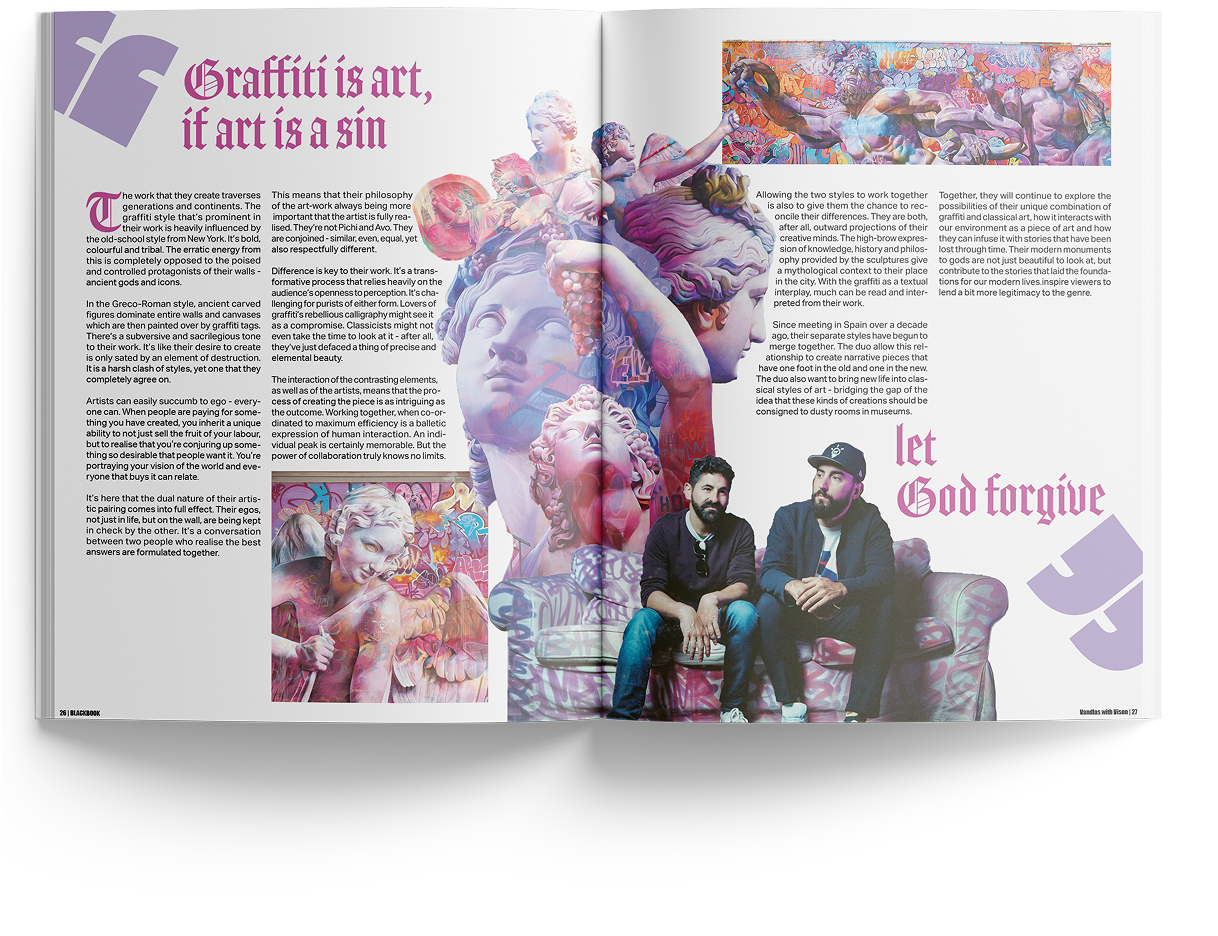
Blackbook embraces a design language rooted in collage, rupture, and analog imperfection. Through torn textures, layered imagery, and expressive typography, it mirrors the visual chaos of graffiti-covered walls. The result is a publication that doesn’t just document street culture — it speaks in its native visual voice.

Page Exploration

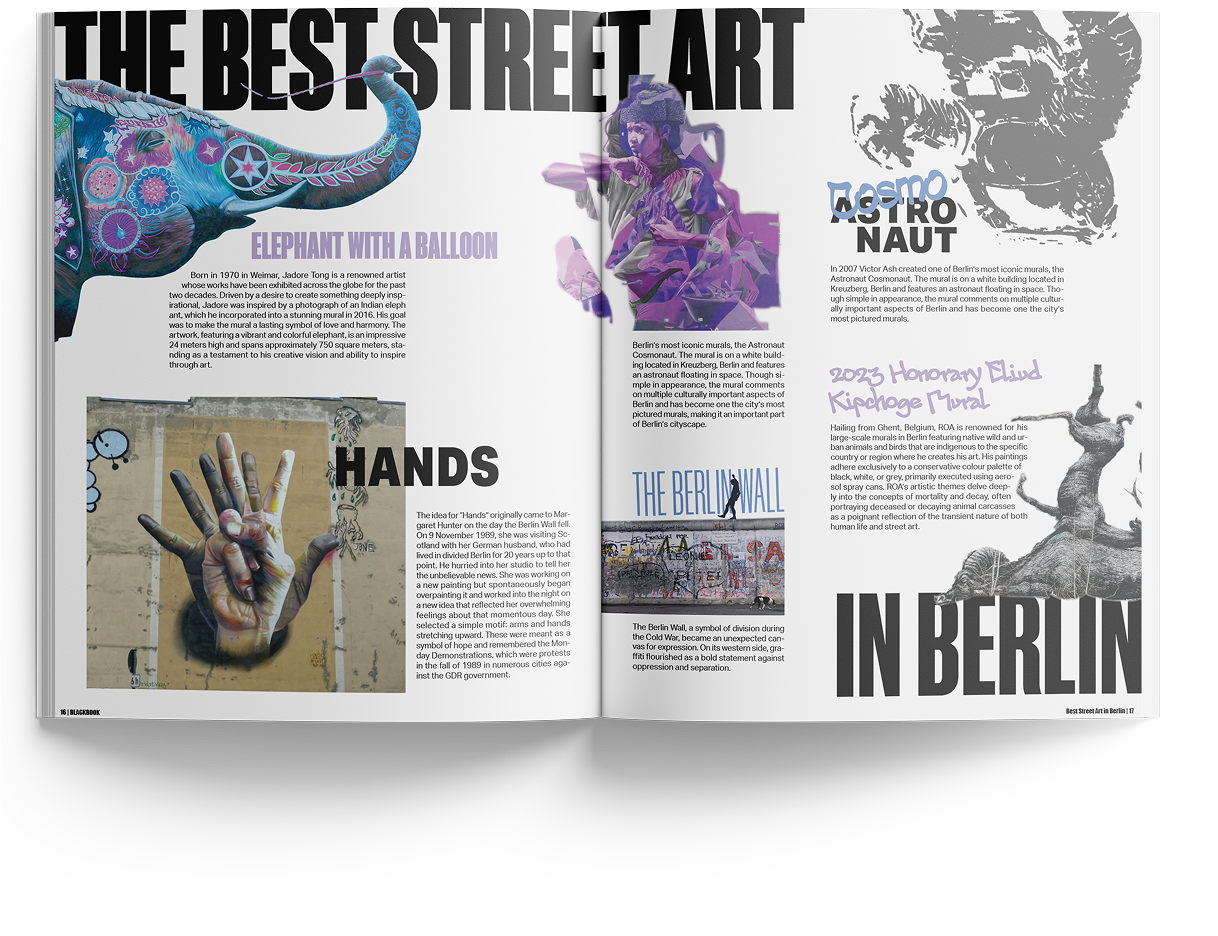
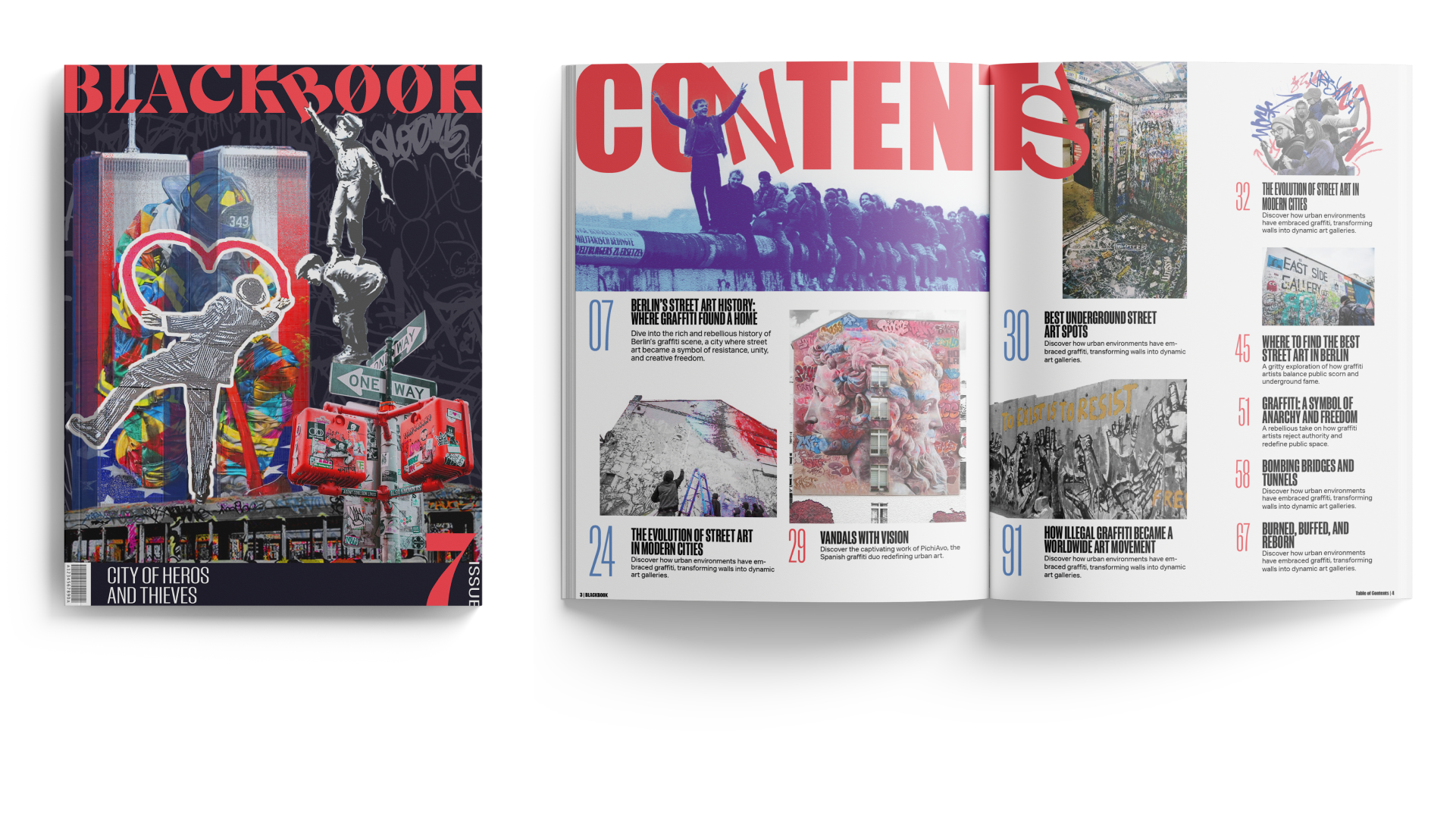
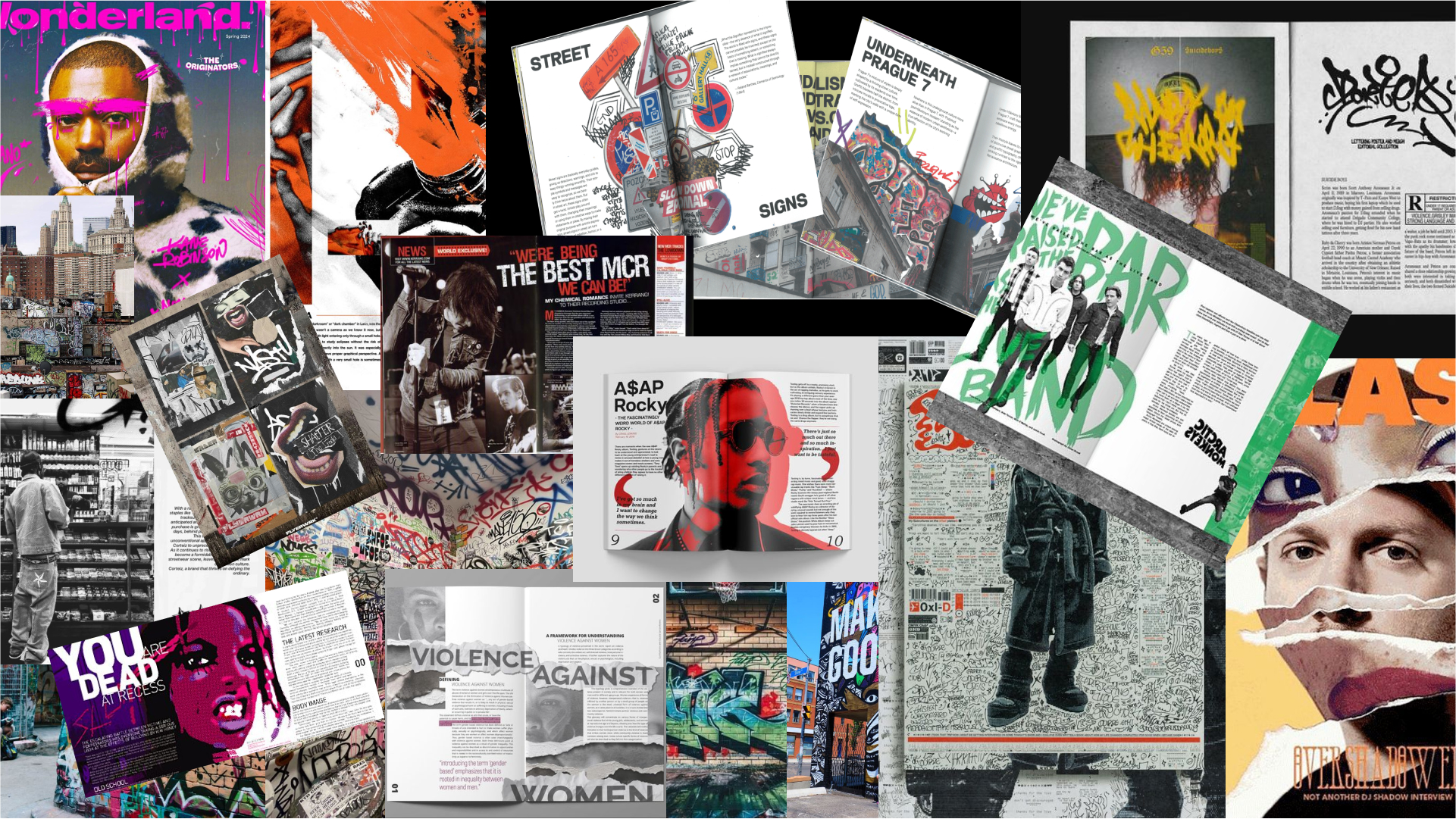
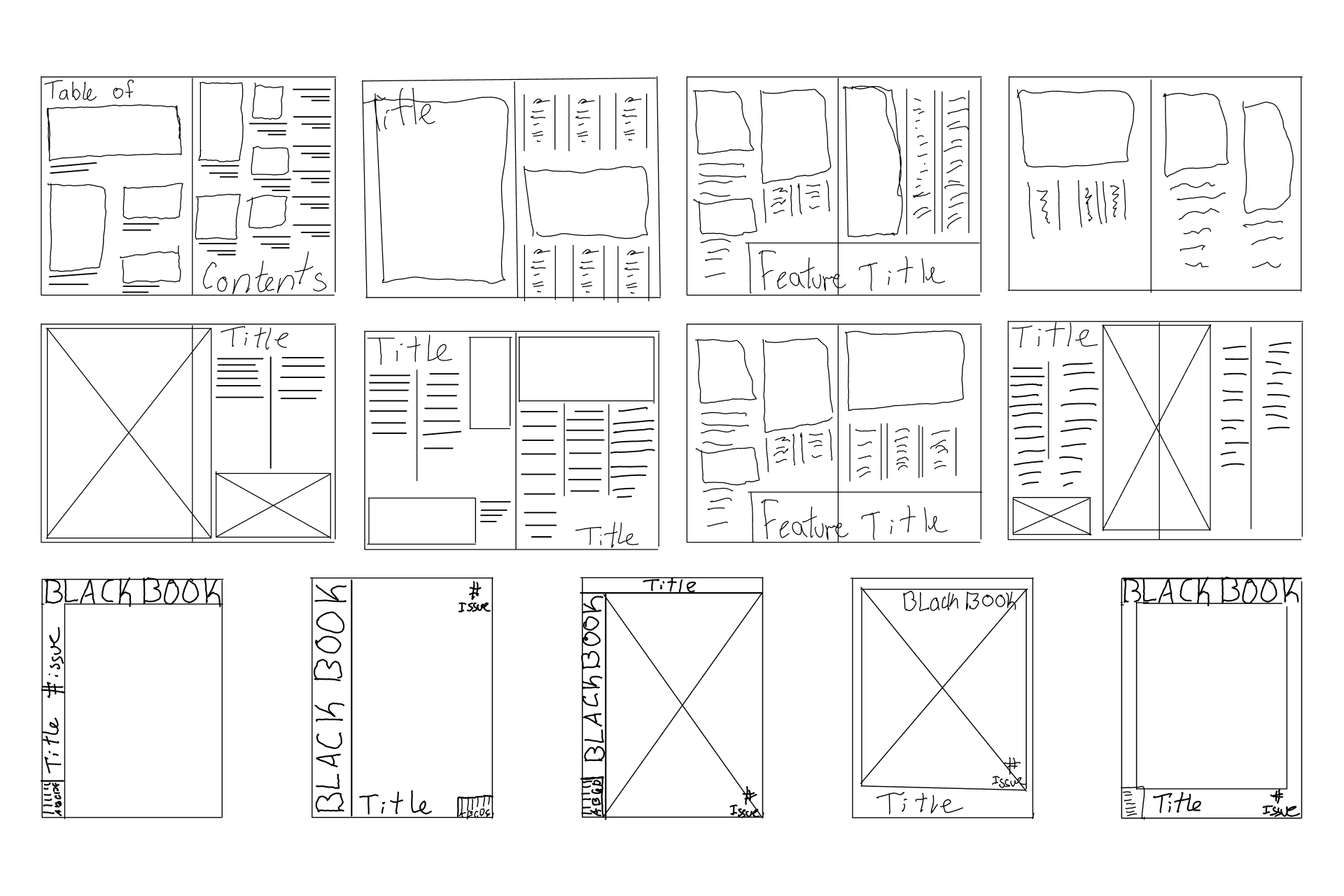
The first step in designing Blackbook was immersing myself in the visual language of graffiti. I knew imagery would be central — not just decorative, but structural. To support the collage-heavy, deconstructed aesthetic, I built a clear content hierarchy early on, allowing the layout to feel spontaneous without sacrificing readability.
Creating the Covers

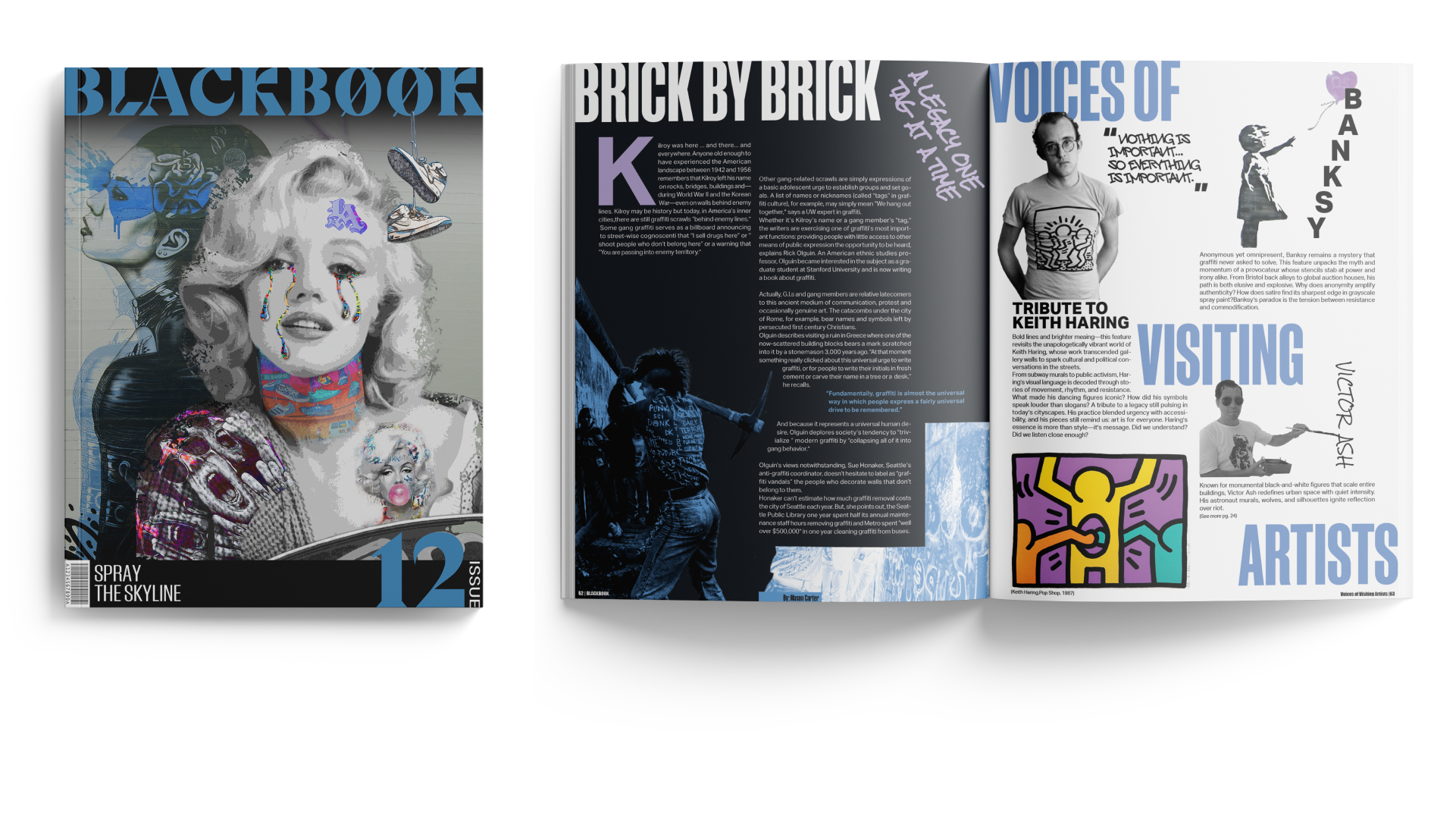
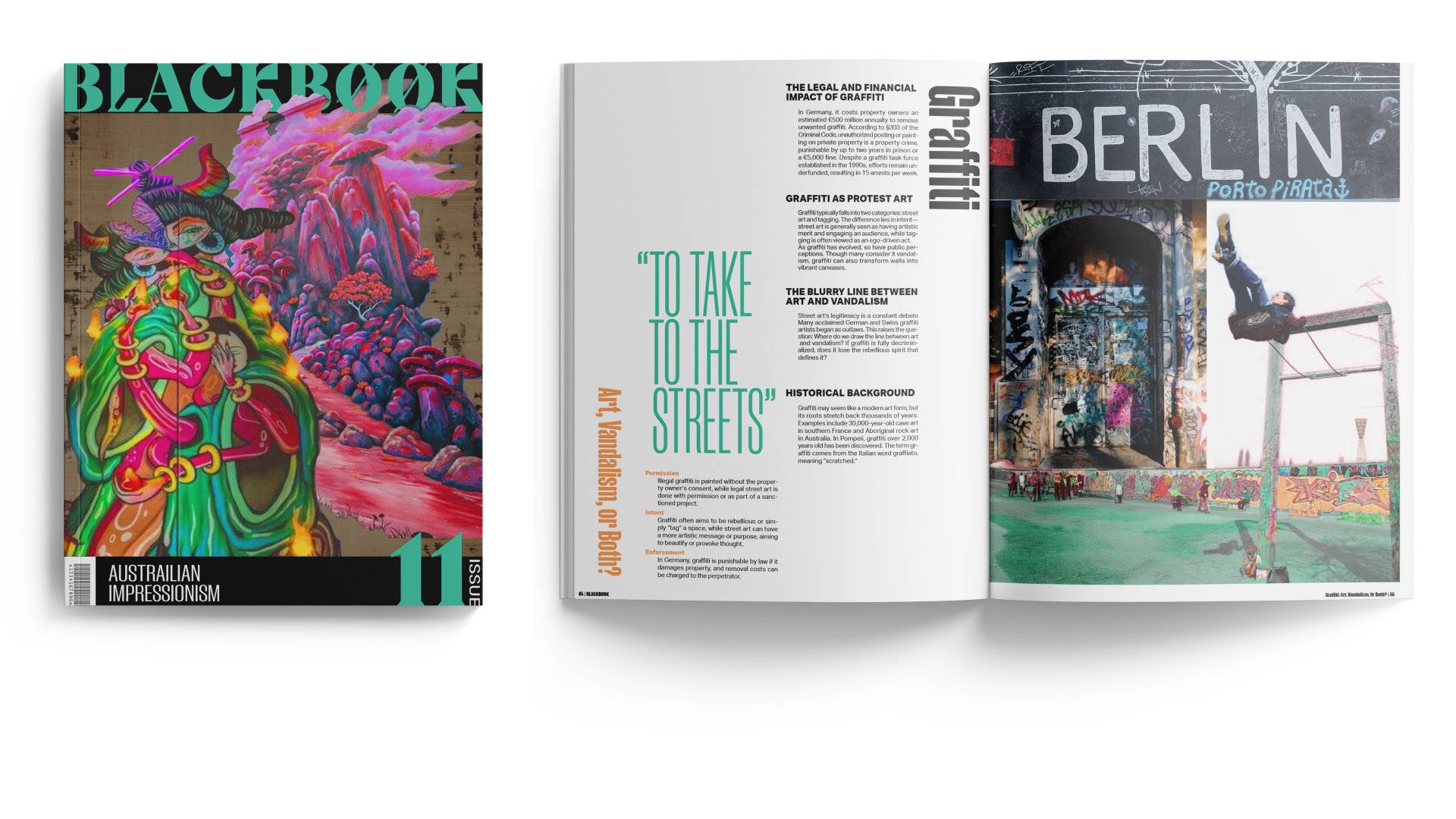
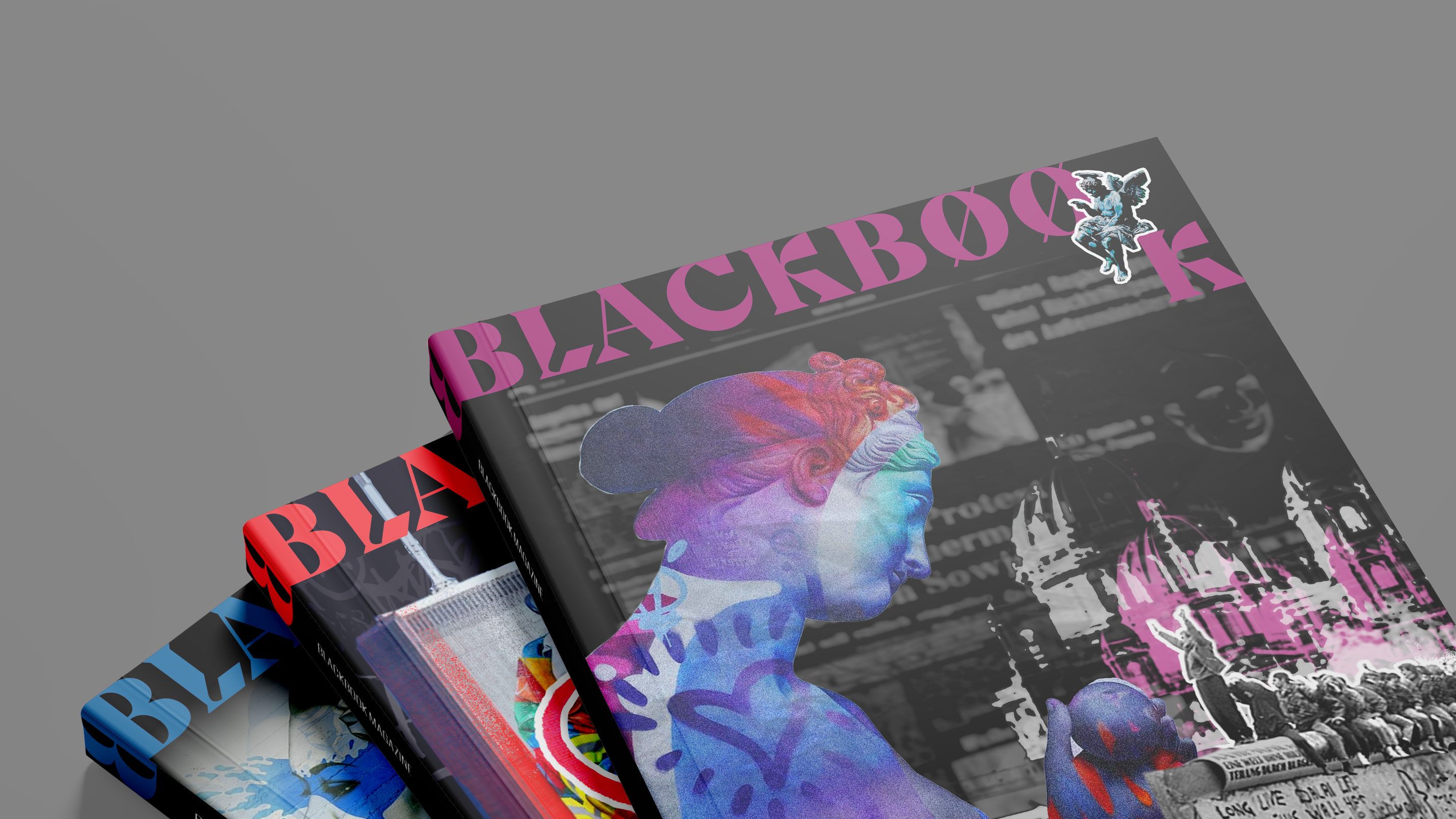
Covers were intentionally designed to reflect the unique graffiti culture of each region featured. Many cities have deep, layered histories with street art, so capturing that context felt essential in creating an original, place-specific magazine. Each cover collages multiple pieces from local artists, resulting in a chaotic yet narrative-driven design that visually tells the story of the city.

Final Design

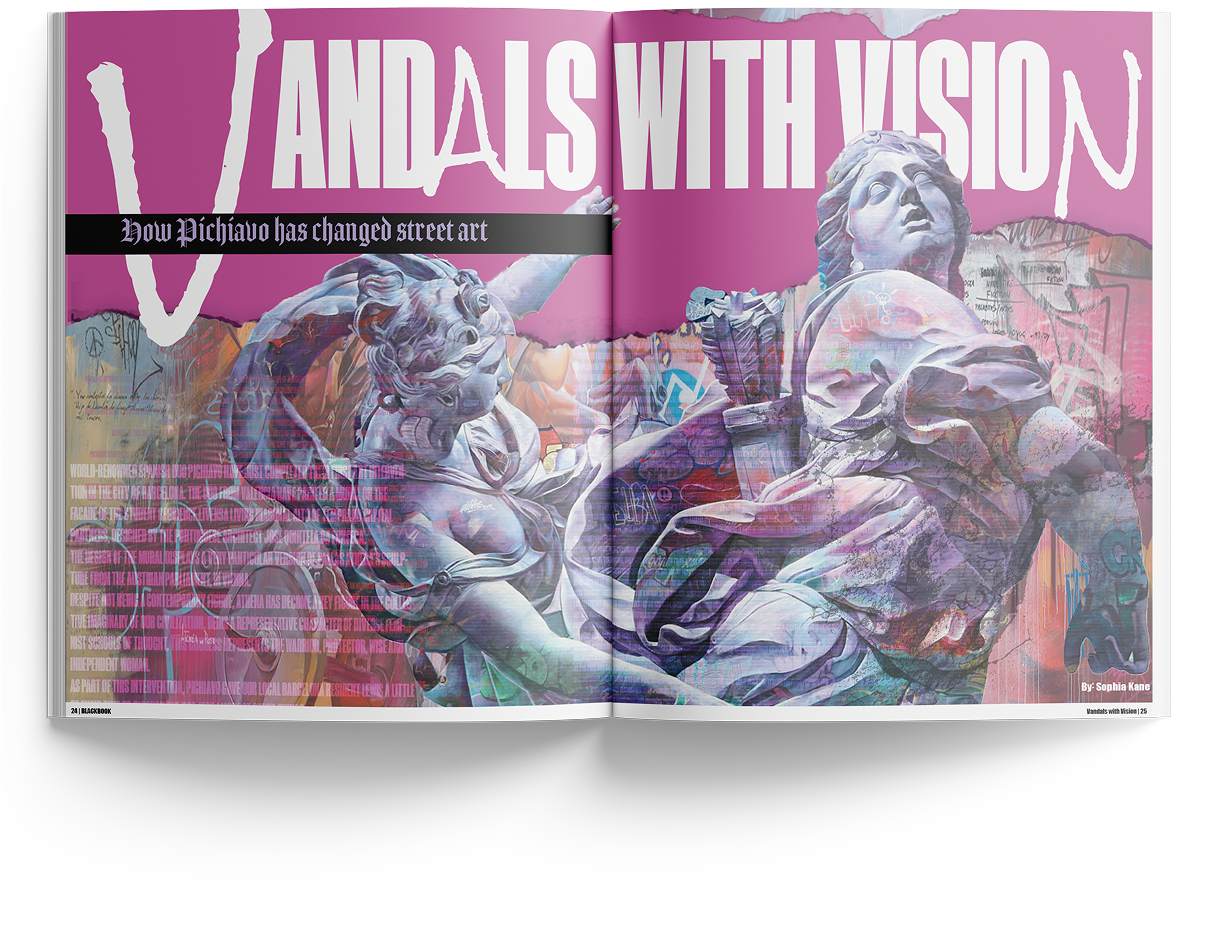
The final design of Blackbook captures the raw energy of graffiti through layered textures, bold typographic clashes, and a deconstructed layout system that mirrors the walls it draws inspiration from. Every page embraces visual noise—torn edges, oversaturated imagery, and overlapping elements—while maintaining a clear structure that guides the reader through the chaos. By blending collage aesthetics with intentional hierarchy, the design balances disorder and clarity, resulting in a publication that feels both expressive and curated.

More Projects